
Department news: summary of January 2018

Department news: summary of January 2018

January 31, 2018

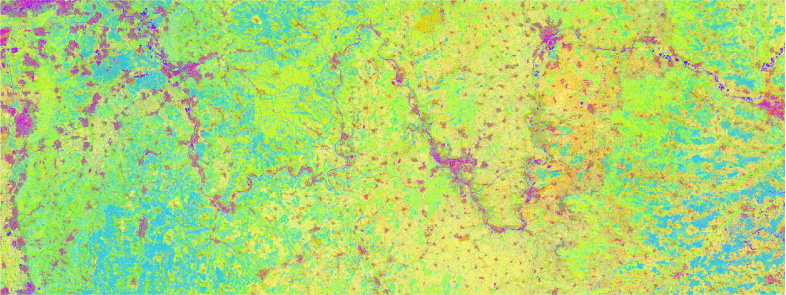
background image: TimeScan Landsat 2015

The beginning of a new year often means starting new habits, so we decided to write a monthly review on the Department’s activities in projects, science and teaching. Here’s the first one for January 2018!

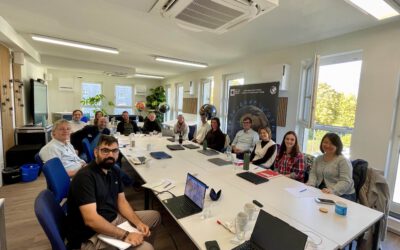
After celebrating xmas with our colleagues, families and friends, we returned to the Department and welcomed our new colleague Maik Netzband, who started working in the CAWA project.

As part of our WASCAL International Capacity Building, the PhD students Mensah Yaw Asare and Clement Nyamekye arrived and they will stay for a couple of months. Both presented their PhD topics focusing on soil erosion controls using remote sensing.

During the winter holidays, a paper written jointly with colleagues from EURAC and MPIo dealing with linking Remote Sensing and Animal Movement data got published.

Making this analysis transferable and open for the scientific community, the rsMove R package was updated.

We were also busy working on a new homepage for both researchers and practitioners from different disciplines working with – or interested in – phenology and remote sensing. We plan to go online in February!

Together with Prof. Dr. Jörg Müller, some colleagues visited the University Research Forest where we are planning to conduct several field campaigns.

Since the regularly courses within the geography study programs have ended this week, our first year EAGLE students gave their final presentations and showed what they learned during their presentation course. Check out their homepage, where they also post helpful R snippets! Our colleagues involved in teaching are busy to prepare the exams for the BSc lecture “Introduction to geographical remote sensing” and the EAGLE lecture “Applications of Earth Observation”. We wish our students success for the upcoming exams!

follow us and share it on:

you may also like:

We’re proud to be part of Space Days Würzburg 2026

We’re proud to be part of Space Days Würzburg 2026

We're happy that we are officially joining the Space Days Würzburg, from October 9th to 10th, 2026. The event brings together astronomy, informatics, and space science for two days, and we contribute Earth observation. Because studying space isn't just about looking...

A reply to the Programming Hero Syndrome post

A reply to the Programming Hero Syndrome post

A while back there was a post about the "Programming Hero Syndrome." This is a small extension to it, from a female perspective to provide a different view. When I started EAGLE, in those first weeks and months, I'd join internship talks or MSc defenses, listen to...

Getting Ready for 25 + 10

Getting Ready for 25 + 10

Next week's the big one. Twenty five years of EORC and ten years of EAGLE, all in one event, and we're expecting around 250 people through the door. Sabine Oppmann's been leading the prep meetings, and we've split things into clear teams: setup, catering, AV and...

Dr. Ariane Droin in front of the camera: RTL reports on HABITRACK

Dr. Ariane Droin in front of the camera: RTL reports on HABITRACK

A film crew from RTL showed up in the Oberpfalz this spring, and joint a field campaign by the Habitrack BMFTR funded project. Dr. Ariane Droin, who leads the Würzburg side of the MONID HABITRACK project at EORC, walked the RTL team through what the project is...

A Weekend together: Where the Institute Talks About Itself

A Weekend together: Where the Institute Talks About Itself

Once a year, or at least that's the idea, the Institute of Geography packs up and heads out to a remote place, this time Burg Rothenfels, an old castle not far from Würzburg, to spend a weekend doing something that almost never happens in the day to day grind:...

Share This