
Statistics session at the FoWiTa 2016

Statistics session at the FoWiTa 2016

June 27, 2016

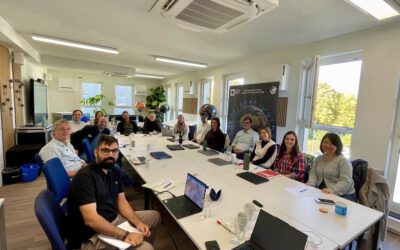
In framework of activities of the working group “Ecology and Environment” of the German Region of the International Biometric Society, this working group joined the forest biometry section of the German Association of Forest Research Institutes (DVFFA) to organize the session “Aktuelle Entwicklungen bei Datenerfassung, Auswertung und Modellierung in der Forstwissenschaft” during the FoWiTa conference 2016 in Freiburg. The session will be chaired by Hoooman Latifi and Wolfgang Falk and will host 10 selected oral presentations and 10 posters on data- and model-assisted advancements in analyzing forest data.

In addition, Steven Hill will also represent LSFE by presenting an oral contribution on “LiDAR-gestützte Erfassung von einzelbaum-und bestandsbasierte Waldentwicklung nach natürlichen Störungsprozessen”. Further information on the conference program can be retrieved here.

fowita

follow us and share it on:

you may also like:

EAGLE Goes Bouldering: Getting to Know the New Cohort

EAGLE Goes Bouldering: Getting to Know the New Cohort

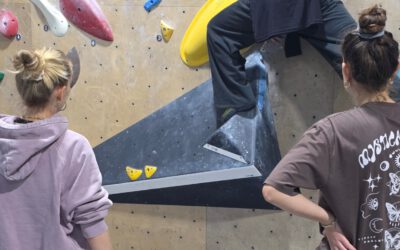
Some of the best conversations don’t happen in a seminar room but outside during a hike or - in this case - a climb. This week, the new EAGLE students got a chance to prove it, swapping lecture slides for climbing shoes at our bouldering social. We booked the Rock-In...

Teaching activities in the Arctic: EORC at UNIS on Svalbard

Teaching activities in the Arctic: EORC at UNIS on Svalbard

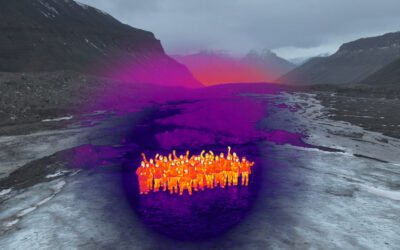
It started a few years ago, when Mirjana Bevanda built up a collaboration with partners at UNIS, the University Centre in Svalbard. Jakob Schwalb-Willmann joined soon after, and today a growing group from EORC heads north to teach there, including Antonio...

bzgl. Art. 50 Verordnung (EU) 2024/1689 (AI Act):

Überwiegend werden eigene originäre Texte und Bilder des EORC genutzt, jedoch sind einige Inhalte von blog post Texten teilweise mit Hilfe von KI überarbeitet worden und einige Bilder sind ganz mit KI erstellt, die jedoch deutlich keine photorealistische Darstellungen abbilden. Aussnahmen sind KI generierte fernerkundliche Datensätze, die explizit für Forschungszwecke mit KI erstellt wurden, hier wird aber durch den assoziierten Text der wissenschaftliche Grund der KI generierten Bilder erläutert.

Share This