Our successfully funded new project will start in August called EO-MOVE “multiscale and -sensor environmental analysis for the analysis of spatio-temporal movement patterns and their relevance for remote sensing“. This project is exploring the importance of active and passive Sentinel data for explaining goose movement patterns. Sentinel 1 and Sentinel 2 will be used to understand and explain the movement patterns and deduce habitat requirements of these animals. The approaches should of course be transferable to other species and various remote sensing specific sensitivity tests will be performed. Benjamin Leutner will work on this project in close collaboration with the Max-Planck Institute for Ornithology in Möggingen (Wikelski, Kölzsch, Safi). More updates about the outcome of this project will be posted soon.

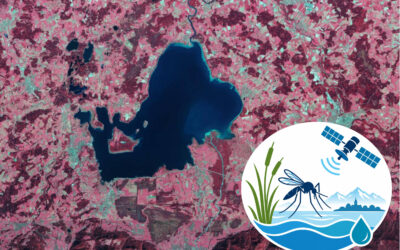
AQUAMOS: New Project on Mosquito Breeding Habitats and Early-Warning Systems
In October 2026, the EORC launched AQUAMOS: “AQUAtic Breeding Habitats and Early MOSquito Warning Systems Using Remote Sensing and Environmental Monitoring”. The pilot project aims to develop a monitoring and early-warning approach for the formation of temporary water...