
new PostDoc: Dr. Nima Ahmadian

new PostDoc: Dr. Nima Ahmadian

September 27, 2017

Dr. Nima Ahmadian joint our department this summer. He received the B.Sc. degree in physics, and the M.Sc. degree in geoinformatics. Later he got his PhD from University of Greifswald. Passionate about synthetic aperture radar (SAR) of soil and vegetation, the move to Julius-Maximilians-Universität (JMU) Würzburg, department of remote sensing was a natural fit. With encouragement from the former and current professors (Prof. Dr. Reinhard Zölitz, and Prof. Dr. Christopher Conrad), Nima started to work as a PostDoc researcher in the GLAM.DE project. The aforementioned project is a part of bigger project so called JECAM (Joint Experiment of Crop Assessment and Monitoring) which is running on a global scale.

follow us and share it on:

you may also like:

Mainpost reported on Stefan Dech’s Bavarian State Medal

Mainpost reported on Stefan Dech’s Bavarian State Medal

We’re happy to see that Mainpost, our local newspaper, also reported on the Bavarian State Medal for Outstanding Services to the Environment. Stefan Dech received it on October 21 at the Munich Residenz, and Environment Minister Thorsten Glauber gave the laudatory...
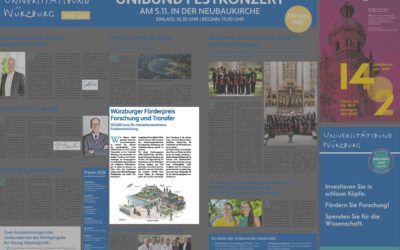
UrbanPulse in the Mainpost, and invitation to the festivities

UrbanPulse in the Mainpost, and invitation to the festivities

If you open the printed Mainpost today, keep an eye out for the Universitätsbund Würzburg’s invitation to the Festkonzert. Among the topics on the page, there’s one we’re rather proud of: our newly funded project URBAN:Pulse, which will be officially celebrated at the...

Field work for MONID-HABITRACK project

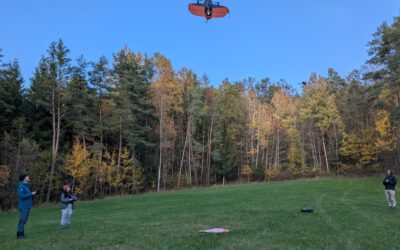
Field work for MONID-HABITRACK project

Today our researchers from the department working on the MONID-HABITRACK project, that is funded by the BMFTR, went to the field to acquire LiDAR, thermal and multispectral data with their drones. Within our department the project is located at the Chair of Remote...

bzgl. Art. 50 Verordnung (EU) 2024/1689 (AI Act):

Überwiegend werden eigene originäre Texte und Bilder des EORC genutzt, jedoch sind einige Inhalte von blog post Texten teilweise mit Hilfe von KI überarbeitet worden und einige Bilder sind ganz mit KI erstellt, die jedoch deutlich keine photorealistische Darstellungen abbilden. Aussnahmen sind KI generierte fernerkundliche Datensätze, die explizit für Forschungszwecke mit KI erstellt wurden, hier wird aber durch den assoziierten Text der wissenschaftliche Grund der KI generierten Bilder erläutert.

Share This