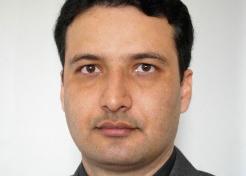

 Dr. Ing. Muhammad Usman is a new PostDoc in the CottonGrow Projekt since summer 2017. He is an engineer by profession with his bachelor in Agricultural Engineering back in 2005 from the University of Agriculture, Faisalabad, Pakistan. He did his master in Irrigation & Drainage (i.e Water Resources) from the same University in 2007. He won silver medal in his bachelor and stood first in the Department of Irrigation & Drainage during his master degree programme. He has worked in the University of Agriculture, Faisalabad, Pakistan as a lecturer from 2005 to 2017. Dr. Usman completed his PhD in April, 2016 from the Institute of Groundwater Management, Technical University Dresden, Germany. His work during his PhD was about coupling of remote sensing data with the numerical modelling approaches for an agricultural land. During his PhD, he was able to publish 4 peer reviewed papers with two more in the queue. He has participated in a number of national and international conferences, seminars and trainings during his PhD studies. He achieved a grade “magna cum laude” in his PhD. Dr. Usman has a wide experience of using different modelling and programming tools especially related to water resources management. His future interests include land surface modelling of agricultural areas, evapotranspiration modelling and crop yield modelling using remotely sensing data. The more detailed description of his past work and his publication can be found from the link below:
Research gate page:
https://www.researchgate.net/profile/Dr_Muhammad_Usman2
Linked in profile page: