
New PhD student Boris Ouattara

New PhD student Boris Ouattara

September 12, 2019

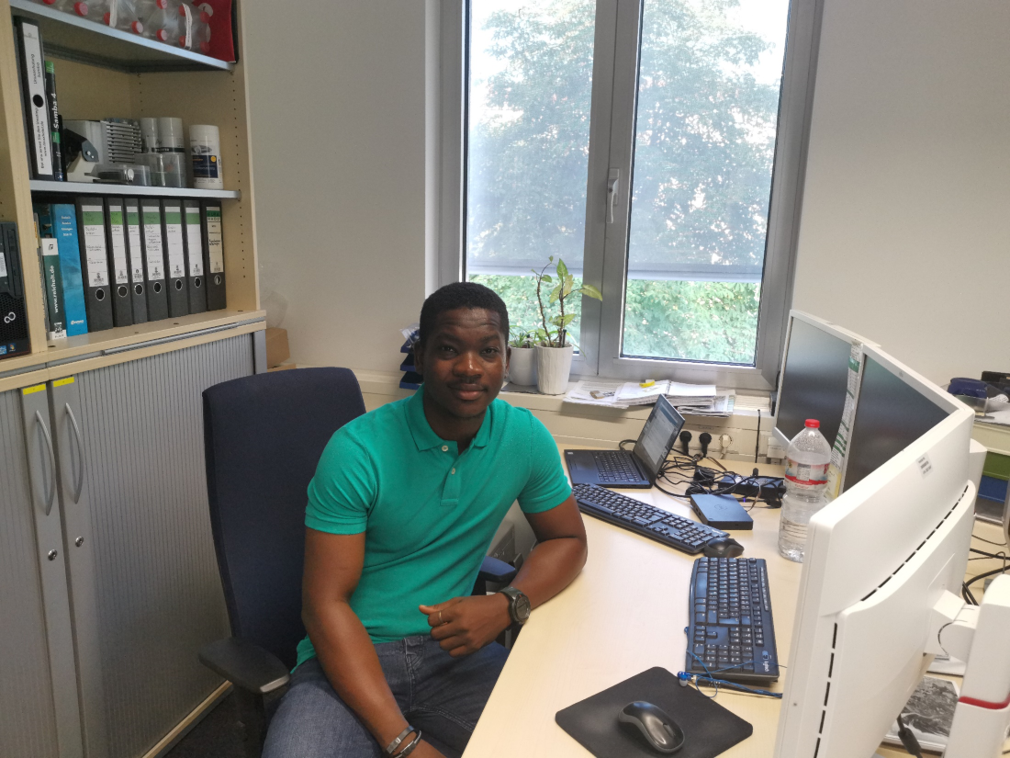
In June 2019, Boris Ouattara joined the Institute of Geography and Geology as a PhD student in the project WASCAL-DE-Coop. He is working under the Department of Physical Geography and is based at the Department of Remote Sensing. Boris will work on estimating the influence of small and/or fragmented fires induced carbon emissions at the scale of the West African savannah landscape. Therefore, he will develop a hybrid algorithm for prototype biomass and burnt area products by means of high-resolution satellite data/products and in-situ measurement.

His research within the project WASCAL-DE-Coop seeks to be a base for a stable regional information systems service in West Africa by providing supportive timely and geographically specific information to regional and local fire managers and other users (NGOs, various international initiatives and commitments) related to carbon emissions.

Boris was part of the WASCAL Graduate School on Climate Change and Human Security at the Université de Lomé (Togo). He has worked at the WASCAL Competence Center (Ouagadougou, Burkina Faso) in the earth observation and application unit on environmental risk, food and water security and as an intern at ECOWAS Commission (Abuja, Nigeria) on disaster risk management.

Before joining the WASCAL program, he completed his studies in Earth Sciences from Université Félix Houphouët Boigny (Côte d’Ivoire).

follow us and share it on:

you may also like:

Help Us Understand Ticks: Join the MONID HABITRACK Study

Help Us Understand Ticks: Join the MONID HABITRACK Study

Lyme borreliosis and tick-borne encephalitis (TBE) are the most common tick-borne diseases in Germany, and they are becoming more relevant. Many infections go unnoticed because they cause mild symptoms or none at all. The MONID HABITRACK project, funded by the BMFTR,...

Setting Up for the 2nd EO4CAM Nutzerworkshop

Setting Up for the 2nd EO4CAM Nutzerworkshop

Right now our staff are busy hauling cases, mounting displays and testing every cable for the 2nd EO4CAM Nutzerworkshop, “Erdbeobachtung für die Klimaanpassung, behördliche Akteure in Bayern”. The doors open tomorrow, and the exhibition...

A dashboard for multi-UAS thermal data

A dashboard for multi-UAS thermal data

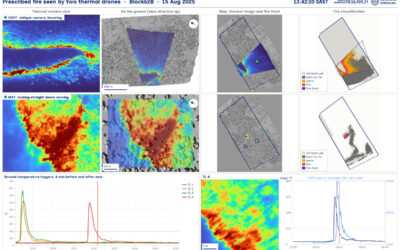
Mapping an active fire with various drones flying in parallel is hard enough. But getting the data processed, evaluated and turned into research datasets is a different story. The publication is on its way, and for now we’d like to share a dashboard by Antonio José...

Have you ever wondered how many trees there are on our campus?

Have you ever wondered how many trees there are on our campus?

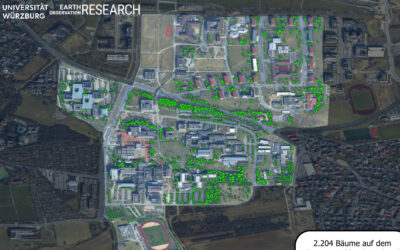
Sometimes a chat during a formal event like the one for the Urban:Pulse funding celebration, results in something totally different. Following a discussion with the vice-president of our University, we promised to look into the research by one of our PhD students...

Earth Observation at the DFG BETAFOR workshop

Earth Observation at the DFG BETAFOR workshop

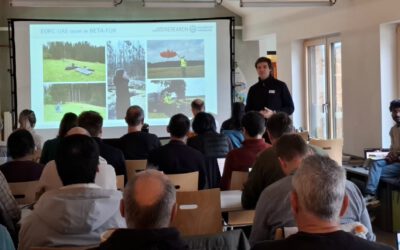
Jakob Schwalb-Willmann represented our team at the DFG BETAFOR workshop in the Bavarian Forest National Park. The room was full of biologists, which is the whole point of an interdisciplinary project, and our UAS multisensor time series drew a lot of interest from the...

bzgl. Art. 50 Verordnung (EU) 2024/1689 (AI Act):

Überwiegend werden eigene originäre Texte und Bilder des EORC genutzt, jedoch sind einige Inhalte von blog post Texten teilweise mit Hilfe von KI überarbeitet worden und einige Bilder sind ganz mit KI erstellt, die jedoch deutlich keine photorealistische Darstellungen abbilden. Aussnahmen sind KI generierte fernerkundliche Datensätze, die explizit für Forschungszwecke mit KI erstellt wurden, hier wird aber durch den assoziierten Text der wissenschaftliche Grund der KI generierten Bilder erläutert.

Share This