
new article on African protected areas

new article on African protected areas

October 10, 2014

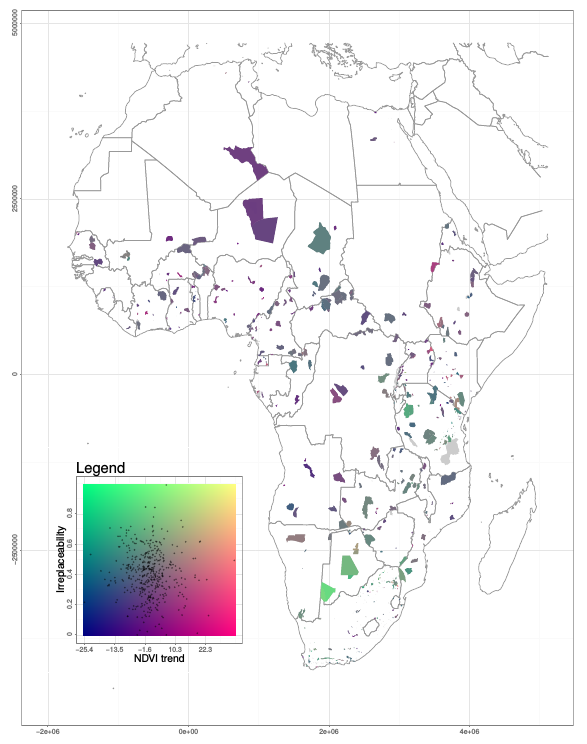
Wegmann et al_Phil_Trans_PA_irreplaceabilityOur new article about the “Role of African protected areas in maintaining connectivity for large mammals” has been published in a special issue on Remote Sensing in Biodiversity and Conservation.

The African protected area (PA) network has the potential to act as a set of functionally interconnected patches that conserve meta-populations of mammal species, but individual PAs are vulnerable to habitat change which may disrupt connectivity and increase extinction risk. Individual PAs have different roles in maintaining connectivity, depending on their size and location. We measured their contribution to network connectivity (irreplaceability) for carnivores and ungulates and combined it with a measure of vulnerability based on a 30-year trend in remotely sensed vegetation cover (Normalized Difference Vegetation Index). Highly irreplaceable PAs occurred mainly in southern and eastern Africa. Vegetation cover change was generally faster outside than inside PAs and particularly so in southern Africa. The extent of change increased with the distance from PAs. About 5% of highly irreplaceable PAs experienced a faster vegetation cover loss than their surroundings, thus requiring particular conservation attention. Our analysis identified PAs at risk whose isolation would disrupt the connectivity of the PA network for large mammals. This is an example of how ecological spatial modelling can be combined with large-scale remote sensing data to investigate how land cover change may affect ecological processes and species conservation.



Theme Issue ‘Satellite remote sensing for biodiversity research and conservation applications’ compiled and edited by Nathalie Pettorelli, Kamran Safi, Woody Turner and Stefan Dech

you may also like:

Super-Test-Site Würzburg meeting

Super-Test-Site Würzburg meeting

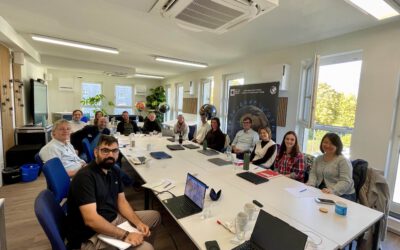
The team of our "Super-Test-Site Würzburg" consortium (University of Würzburg, the Karlsruhe Institute of Technology, the Friedrich-Alexander-University Erlangen-Nürnberg, Leibniz-Institute for Länderkunde in Leipzig  and the German Aerospace Center)...

A Warm and Festive Evening: The EORC Christmas Party

A Warm and Festive Evening: The EORC Christmas Party

As the year slowly draws to a close, the EORC came together this week to celebrate the season and spend an evening away from our usual desks, and classrooms. Our annual EORC Christmas Party brought together staff members, student assistants, and our current MSc...

Ideas and Inspiration: Our Internship & MSc Thesis Fair

Ideas and Inspiration: Our Internship & MSc Thesis Fair

This week we hosted our annual EORC Internship and MSc Thesis Fair, bringing together our research staff and the current cohort of EAGLE students. As always, the event offered a relaxed and welcoming atmosphere—an ideal setting for exploring future academic pathways....

Presenting Our UAS Research at the UFS Science Team Meeting

Presenting Our UAS Research at the UFS Science Team Meeting

At the recent UFS (Umweltforschungsstation Schneefernerhaus) science team meeting, our group had the opportunity to present current and planned UAS-based research activities in the high-mountain environment surrounding the Zugspitze. The meeting offered an ideal...

BetaFor DFG Project Undergoes Evaluation in Würzburg

BetaFor DFG Project Undergoes Evaluation in Würzburg

In a productive and inspiring atmosphere, our BetaFor DFG project recently welcomed a panel of internationally renowned scientists for its official evaluation. The visit combined the traditional presentation format with a hands-on excursion into the project’s core...