
book chapter published

book chapter published

November 12, 2015

Thenkabail_remote_sensing_book_chapter_oppelt_scheiber_gege_taubenboeck_wegmann_bergerOur book chapter “Fundamentals of Remote Sensing for Terrestrial Applications: Evolution, Current State of the Art, and Future Possibility” in the book “Remotely Sensed Data Characterization, Classification, and Accuracies” edited by Thenkabail is now available.

From the webpage: “This volume demonstrates the experience, utility, methods, and models used in studying a wide array of remotely sensed data characterization, classification, and accuracies for terrestrial applications. Leading experts on global geographic coverage, study areas, and array of satellite and sensors contribute to this unique handbook. This theoretical as well as highly practical book represents a thorough history of advancement in the field over last 50 years, bringing us to where we are now, and highlighting future possibilities.”


Natascha Oppelt, Rolf Scheiber, Peter Gege, Martin Wegmann, Hannes Taubenboeck, Michael Berger

follow us and share it on:

you may also like:

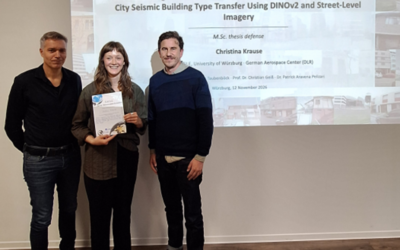
Successful MSc Defense by Christina Krause

Successful MSc Defense by Christina Krause

Congratulations to our EAGLE student Christina Krause, who successfully defended her MSc thesis titled "Active Learning and Parameter-Efficient Feature Adaptation for Cross-City Seismic Building Type Transfer Using DINOv2 and Street-Level Imagery" on November 12,...

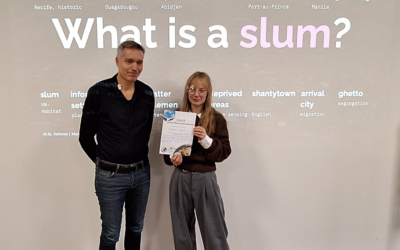
Successful MSc Defense by Marlene Bauer

Successful MSc Defense by Marlene Bauer

Congratulations to our EAGLE student Marlene Bauer, who successfully defended her MSc thesis titled "Robust and Uncertainty-Aware Informal Settlement Mapping – Cross-City Generalisation Across Diverse Urban Morphologies Using High-Resolution Satellite Imagery in...

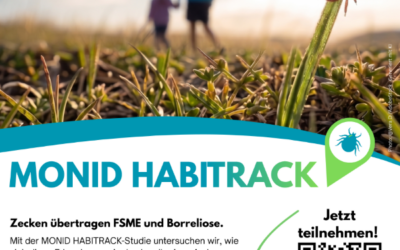
Help Us Understand Ticks: Join the MONID HABITRACK Study

Help Us Understand Ticks: Join the MONID HABITRACK Study

Lyme borreliosis and tick-borne encephalitis (TBE) are the most common tick-borne diseases in Germany, and they are becoming more relevant. Many infections go unnoticed because they cause mild symptoms or none at all. The MONID HABITRACK project, funded by the BMFTR,...

Setting Up for the 2nd EO4CAM Nutzerworkshop

Setting Up for the 2nd EO4CAM Nutzerworkshop

Right now our staff are busy hauling cases, mounting displays and testing every cable for the 2nd EO4CAM Nutzerworkshop, “Erdbeobachtung für die Klimaanpassung, behördliche Akteure in Bayern”. The doors open tomorrow, and the exhibition...

bzgl. Art. 50 Verordnung (EU) 2024/1689 (AI Act):

Überwiegend werden eigene originäre Texte und Bilder des EORC genutzt, jedoch sind einige Inhalte von blog post Texten teilweise mit Hilfe von KI überarbeitet worden und einige Bilder sind ganz mit KI erstellt, die jedoch deutlich keine photorealistische Darstellungen abbilden. Aussnahmen sind KI generierte fernerkundliche Datensätze, die explizit für Forschungszwecke mit KI erstellt wurden, hier wird aber durch den assoziierten Text der wissenschaftliche Grund der KI generierten Bilder erläutert.

Share This